
FortiSASE: Secure Cloud Access & SASE Platform for Enterprises
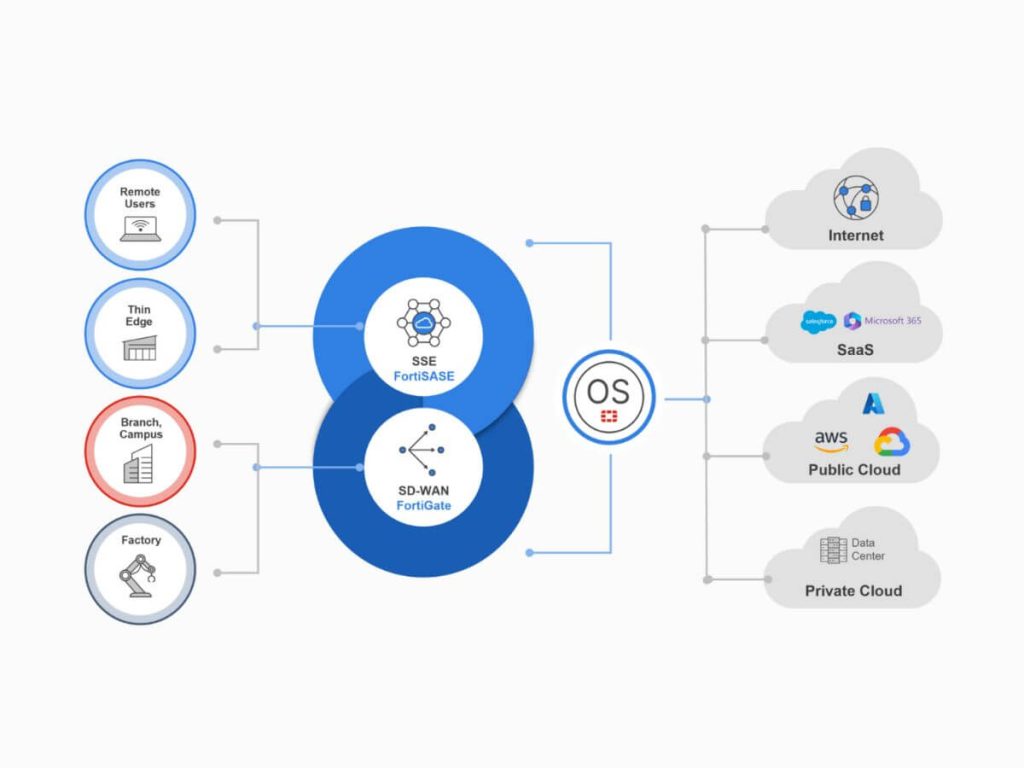
Image via fortinet.com
Secure your organization’s cloud access with granular secure connectivity and consistent protection.
- Protect your sensitive data with enhanced security measures against evolving security gaps.
- Achieve seamless cloud access for uninterrupted workforce connectivity in a hybrid environment.
- Gain valuable insights into user activity and application performance for better decision-making.
What is FortiSASE?
FortiSASE is Fortinet’s cloud-delivered Security Service Edge (SSE) platform that unifies secure access, threat protection, and traffic inspection for users, devices, and branch locations. It delivers a full stack of security, SWG, ZTNA, CASB, DLP, FWaaS, RBI, and advanced threat protection from a globally distributed SASE cloud backbone.
FortiSASE integrates tightly with FortiGate Secure SD-WAN, extending consistent policies across remote users and sites. With identity-based access, continuous posture checks, and AI-powered threat prevention, it enables secure, direct-to-cloud connectivity while simplifying operations through a single management console.
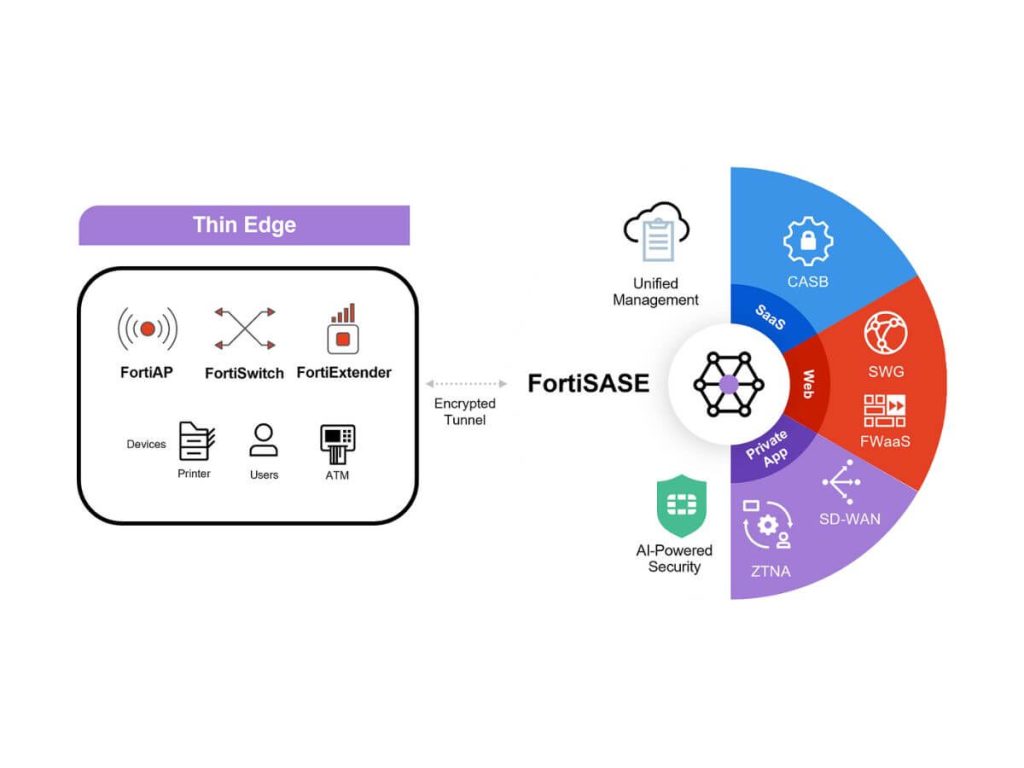
Image via fortinet.com
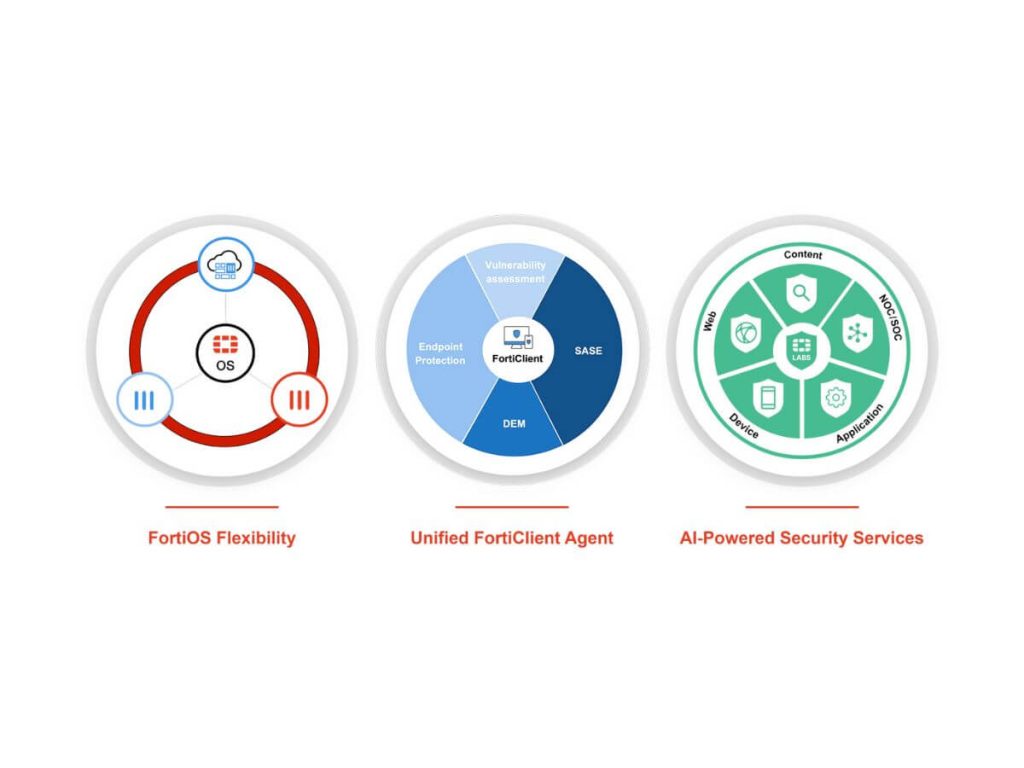
Image via fortinet.com
Security Features and Capabilities
FortiSASE delivers a full Security Service Edge (SSE) stack. The table below summarizes its core features, benefits, and key capabilities:
| Feature | Purpose / Benefit | Key Capabilities |
|---|---|---|
| Secure Web Gateway (SWG) | Protects users from web threats | URL filtering, SSL/TLS inspection, malware detection |
| Firewall-as-a-Service (FWaaS) | Cloud firewall with consistent policy | L3–L7 enforcement, IPS, application control, policy consistency |
| Zero Trust Network Access (ZTNA) | Secure, identity-based app access | Per-application segmentation, continuous device posture checks, VPN replacement |
| Cloud Access Security Broker (CASB) | Protect SaaS applications | Inline/API-based inspection, shadow IT discovery, cloud policy enforcement |
| Data Loss Prevention (DLP) | Prevent data leaks | Content and file-level inspection, inline policy enforcement |
| Remote Browser Isolation (RBI) | Protect endpoints from web threats | Browser sessions run in a remote container, blocking zero-day exploits |
| Secure SD-WAN Integration | Extend SASE to branches | Traffic steering to the nearest PoP, unified policies, optimized cloud access |
| Digital Experience Monitoring (DEM) | Visibility into performance | Endpoint, network, and application monitoring, and troubleshooting insights |
| Thin Edge Security | Protect minimal or remote sites | FortiExtender/WLAN integration, cloud inspection at scale, no extra appliances |
| Global SASE Cloud Backbone | High-performance connectivity | Multiple PoPs, low-latency access, reliable connections for hybrid teams |
FortiSASE Deployment Options
Image via fortinet.com
FortiSASE supports multiple deployment models to secure users, devices, and sites in any environment. Choose the approach that fits your infrastructure, workforce, and cloud strategy.
Ideal for managed laptops and corporate devices.
This method provides full SASE capabilities—including ZTNA, SWG, CASB, and DLP—directly through the endpoint agent. It enforces device posture checks, identity-based access, and secure direct-to-cloud connectivity through the nearest FortiSASE PoP.
Designed for BYOD, contractors, and environments where installing an agent is not possible.
Traffic is secured through browser-based controls, reverse proxy, or API-based CASB, enabling safe SaaS access, URL filtering, and data protection without endpoint installation.
For organizations with distributed sites or existing FortiGate SD-WAN.
Traffic from branches and edge locations is routed to FortiSASE via IPsec or SD-WAN steering, enabling cloud-delivered security inspection, policy consistency, and unified management across on-premises and cloud environments.
Licensing, Scalability, and Management
FortiSASE provides flexible licensing options, scalable deployment for teams of any size, and centralized management to simplify security operations across remote users, branch offices, and cloud applications.
Why SASE Matters (Compared to Traditional VPN, MPLS, and Hardware-Based Security)
Traditional network architectures were designed around a central data centre. As organisations adopt cloud applications, remote work, and distributed sites, older methods create operational and performance challenges:
Limitations of Traditional Approaches
- VPN Backhauling: Remote users connect to the data centre, causing latency when accessing cloud or SaaS applications.
- MPLS Dependence: MPLS routes traffic efficiently but is costly, less flexible, and not designed for modern cloud workloads.
- Multiple Point-Products: Firewalls, web filters, VPN appliances, and CASB tools often operate independently, increasing management complexity and leading to policy inconsistencies.
- Hardware Constraints: Physical appliances require maintenance, patches, and capacity upgrades, which can slow scaling.
Limitations of Traditional Approaches
- Cloud-Native Architecture: Security and networking are delivered from the cloud, eliminating the need to backhaul traffic to on-premises firewalls.
- Direct-to-Cloud Access: Remote users and branches connect directly to cloud applications, improving performance and reducing latency.
- Unified Security Stack: SWG, ZTNA, CASB, FWaaS, and SD-WAN operate through a single platform, enabling consistent policy enforcement.
- Global Points-of-Presence (PoPs): Traffic is inspected closer to the user, enhancing speed and reliability.
- Simplified Operations: Centralised management reduces configuration errors, operational workload, and reliance on multiple appliances.
- Lower Total Cost of Ownership: Cloud delivery reduces hardware spending, simplifies licensing, and supports scalable deployment.
Fortisase Ideal Use Cases
FortiSASE is ideal for organizations that need secure, high-performance cloud access across distributed teams:
- Hybrid and remote workforce: Secure direct-to-cloud connectivity for employees working from anywhere.
- Multi-site enterprises: Consistent security for branch offices, micro-branches, or retail locations.
- Contractors and BYOD environments: Flexible agent-based or agentless deployment to protect unmanaged devices.
- Cloud-first organizations: Seamless access and protection for SaaS applications and cloud workloads.
- Global teams: Low-latency performance through FortiSASE’s worldwide PoPs for reliable connectivity.
FortiSASE supports diverse enterprise scenarios. The examples below illustrate how organizations can secure cloud access, branch offices, remote users, and third-party devices.
Get the Best Price for FortiSASE
Enable secure internet access and seamless connectivity for your employees from anywhere
FAQs on FortiSASE
Is SASE better than SD-WAN?
SASE and SD-WAN serve different purposes but complement each other.
- SASE delivers a cloud-native security and networking framework, including SWG, FWaaS, ZTNA, CASB, and DLP, ideal for secure access to cloud applications and remote users.
- SD-WAN optimizes network performance for branches and data centers. When integrated with SASE, it provides secure, high-performance connectivity across cloud and on-premises networks.
Is CASB the same as SASE?
CASB is a component of SASE focused on securing cloud applications. It provides visibility, data protection, and policy enforcement for SaaS and cloud services. SASE is a broader framework that integrates CASB, SWG, FWaaS, ZTNA, and SD-WAN for unified security across all users, devices, and locations.
What is the difference between MPLS and SASE?
MPLS provides private, reliable network paths between sites but is costly and less flexible for cloud adoption. SASE replaces or complements MPLS by delivering secure, direct-to-cloud connectivity with unified security policies, low-latency access, and simplified management for remote users, branch offices, and cloud workloads.
Does FortiSASE integrate with existing FortiGate firewalls?
Yes. FortiSASE integrates with FortiGate SD-WAN and firewall deployments, enabling consistent security policies across remote users, branch offices, and cloud applications.
How is FortiSASE licensed and scaled for enterprise environments?
FortiSASE offers flexible licensing based on users, sites, or devices. Its cloud-native architecture allows seamless scaling from small teams to large distributed enterprises, with centralized management via a single console.
Does FortiSASE support multi-cloud environments?
Yes. FortiSASE provides secure, direct-to-cloud connectivity for AWS, Azure, Google Cloud, and SaaS applications, with consistent security policies and threat protection across all cloud environments.
Other Products From Fortinet
Discover how products within Fortinet Security Fabric protect your assets against security breaches.
Implement comprehensive SIEM solution to manage security events and logs effectively.
Secure your network with our cloud-based management solution for Fortinet devices and services.
Manage security and network for all your Fortinet devices from one centralized platform.
Protect your network with the industry-leading physical and virtual firewalls, the cornerstone of the Fortinet Security Fabric, integrating seamlessly with FortiSASE for hybrid deployments.