
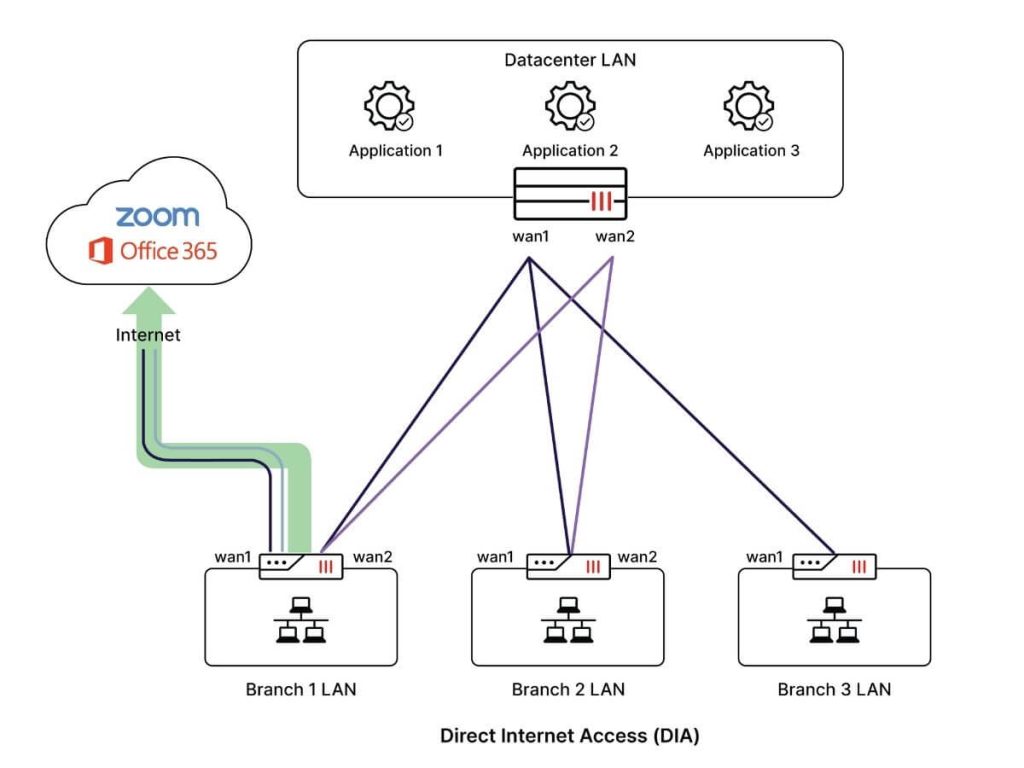
Image via fortinet.com
Traditional WANs often struggle to keep up with today’s cloud-first, hybrid work environments. High maintenance costs, network congestion, and evolving security threats make it difficult for enterprises to maintain reliable and efficient connectivity. SD-WAN addresses these challenges by modernizing network architecture, optimizing performance, and simplifying management.
SD-WAN has emerged as a solution to these challenges.
What is SD-WAN?
SD-WAN (Software-Defined Wide Area Network) is a virtual networking solution that connects multiple locations — from branch offices to data centers — using software-defined networking principles. It abstracts control from physical connections, allowing IT teams to:
- Centrally manage traffic across MPLS, broadband, and LTE/5G links.
Enforce application-specific policies based on business priorities. - Ensure secure connectivity through integrated encryption, firewalls, and intrusion prevention.
Unlike traditional WANs, SD-WAN dynamically routes traffic based on network conditions, application requirements, and security policies. This combination of intelligence, flexibility, and security makes SD-WAN a cost-effective solution for modern enterprises.
SD-WAN Deployment Scenarios
Organizations implement SD-WAN to modernize their networks, improve performance, and support digital transformation. Common use cases include:
- Connecting multiple offices and branches: Reliable, high-performance connectivity without high MPLS costs.
- Supporting remote and hybrid work: Secure access to applications and cloud services from anywhere.
- Optimizing cloud and SaaS access: Direct-to-cloud routing reduces latency for critical business applications.
- Simplifying network management: Centralized management allows IT teams to deploy policies, updates, and security measures efficiently.
- Reducing operational costs: Selective use of broadband and MPLS lowers infrastructure and maintenance expenses while maintaining high performance.
Key Benefits of SD-WAN for Businesses
Here’s how SD-WAN helps businesses improve network performance, security, and flexibility:
Better performance for cloud and SaaS apps
SD-WAN allows cloud and SaaS traffic to bypass backhauling through central data centres, reducing latency and improving responsiveness. Direct-to-cloud access, combined with application-aware routing, ensures smooth performance for business-critical platforms across both on-premises and remote environments.
Better security and easier management
SD-WAN protects users and data at all locations by combining encryption, firewalls, and secure access controls. Centralised management makes it easy for IT teams to set up, update, and enforce security policies in branches, remote offices, and the cloud. Advanced solutions may also work with modern security frameworks like SASE or Zero Trust. This makes SD-WAN an important part of a complete cybersecurity plan.
Cost-effectiveness and ease of use
SD-WAN lowers operational costs without sacrificing performance by reducing the need for costly MPLS connections. Cloud-managed SD-WAN and integration with IaaS platforms reduce the need for hardware and make network management easier. Companies get a solution that is both affordable and scalable, meaning it can grow as their needs change.
Support for remote work, scalability, and flexibility
When businesses grow, SD-WAN changes. It easily supports multiple branches, hybrid work environments, and remote workers, all while providing consistent performance and secure connectivity. Centralised management and smart traffic control let network administrators quickly add users, deploy updates, or expand the network. This keeps businesses flexible and able to respond swiftly to market changes.
Better Analytics and Visibility
Centralised monitoring lets IT teams see how well networks and applications are working in real time. This visibility enables problems to be fixed before they happen, optimizes bandwidth use, and ensures that all users have the same experience, no matter where they are. Companies can use data to make decisions that will make their networks even more efficient and reliable.
How SD-WAN Differs from Traditional Network Solutions
SD-WAN differs from older network approaches in several key ways:
| Feature / Solution | SD-WAN | Traditional WAN (MPLS) | VPN |
|---|---|---|---|
| Performance | Optimizes traffic dynamically, reduces latency | Fixed paths can suffer congestion | Depends on the underlying WAN, may slow under load |
| Security | Integrated encryption, centralized management | Requires separate appliances and policies | Basic encryption, limited centralized control |
| Cost | Uses broadband + MPLS selectively, reduces operational costs | High recurring costs for MPLS circuits | Low-cost but limited scalability and management |
| Scalability | Easy to add branches and remote users | Adding sites can be slow and expensive | Adding users/sites is limited and complex |
| Management | Centralized console, simplified updates | Requires manual configuration per site | Decentralized, complex for multiple locations |
| Cloud / SaaS Readiness | Direct-to-cloud connections, optimized for hybrid work | Backhauling traffic through data centers can cause latency | Often not optimized for cloud apps |
How SD-WAN Enhances Cloud & SaaS Application Performance
Direct Cloud Access
Traditional networks often “backhaul” traffic from branch offices to a central data center for security inspection, even if the destination is a cloud application. This adds unnecessary latency and slows performance. SD-WAN enables secure local internet breakout, providing a direct, low-latency path to SaaS and IaaS providers and improving user experience and productivity.
Dynamic Path Selection
SD-WAN continuously monitors the performance of all network links — broadband, MPLS, 4G/5G LTE — for latency, jitter, and packet loss. It then routes application traffic along the optimal path in real time. If a link degrades, traffic automatically fails over to a healthier link, preventing interruptions to critical applications such as VoIP and video conferencing.
Application-Aware Routing and Prioritization
From the first packet, SD-WAN identifies applications and enforces policies based on business priorities. Performance-sensitive apps such as Microsoft 365 or Salesforce can be given top priority, while less critical traffic, like software updates, is deprioritized. This ensures consistent performance for the applications that matter most.
WAN Optimization Techniques
Many SD-WAN solutions include data deduplication, compression, and forward error correction (FEC) to improve efficiency. FEC, for example, helps recover lost packets over unreliable public internet connections, smoothing voice and video quality and enhancing overall application performance.
Tunnel Bonding for Increased Bandwidth
SD-WAN can aggregate multiple WAN links into a single high-throughput connection. This boosts overall bandwidth and network resilience, ensuring business continuity even if one of the underlying connections fails.
Centralized Management and Visibility
A single-pane-of-glass console allows IT teams to manage traffic policies across multiple locations and cloud environments. Centralized visibility into network health and application performance enables proactive troubleshooting and consistent user experiences across the enterprise.
SD-WAN is a Strategic Investment for Businesses
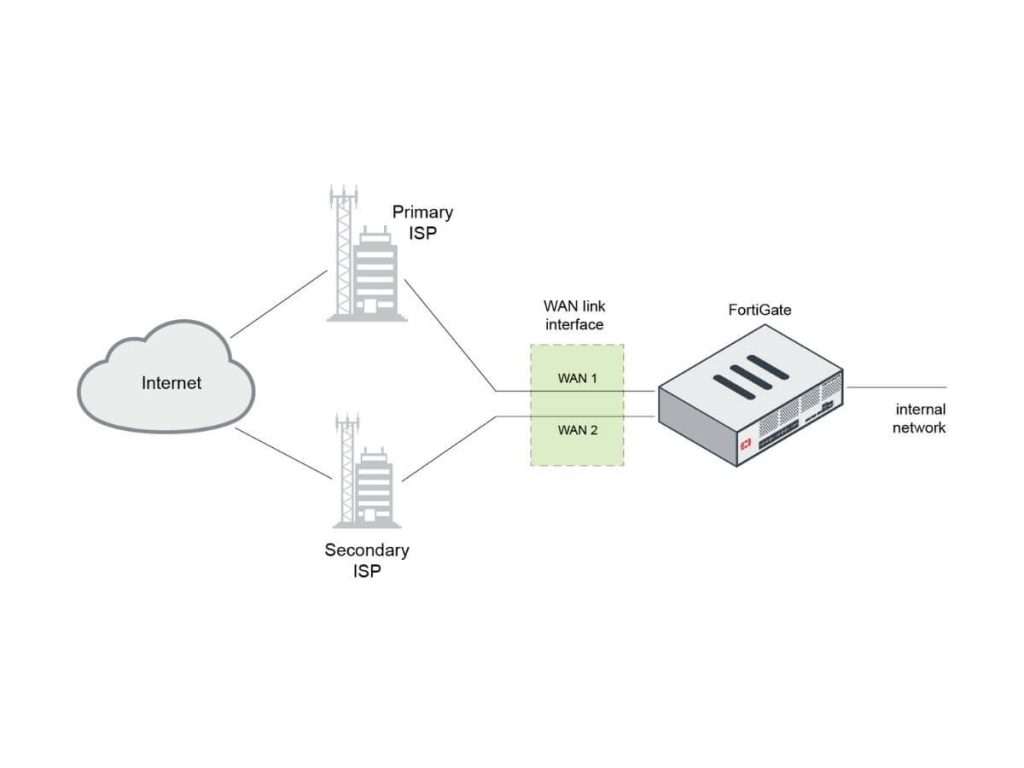
Image via fortinet.com
Adopting SD-WAN is more than a technology upgrade; it’s a business strategy.
- Enhancing User Experience: Reliable, high-performance connections improve productivity for employees and customers alike.
- Streamlining Operations: Centralized management reduces operational complexity and IT overhead.
- Supporting Growth: The network can scale effortlessly to accommodate new branches, remote workers, or cloud initiatives.
- Future-Proofing the Enterprise: SD-WAN integrates with modern security frameworks and hybrid/multi-cloud environments, ensuring the network can evolve with business needs.
For businesses in Malaysia, Spectrum Edge, the largest Fortinet distributor, offers advanced SD-WAN solutions that combine high performance, strong security, and easy management. Investing in SD-WAN to change your network is an investment in operational excellence and long-term business success.
Conclusion
SD-WAN brings together performance, security, and scalability in a single solution built for modern enterprise environments. It enhances cloud access, reduces reliance on expensive legacy WAN links, and provides IT teams with clearer visibility and control over the entire network.
With a future-focused SD-WAN deployment, businesses can improve productivity, support hybrid work, and prepare their networks for continued digital growth. Spectrum Edge provides high-performance SD-WAN solutions in Malaysia that help companies strengthen their network, reduce complexity, and expand with confidence.
SD‑WAN: Questions & Quick Answers
SD-WAN integrates encryption, firewalls, and intrusion prevention directly into the network. It can also work with modern security frameworks such as SASE or Zero Trust, providing consistent protection across locations.
Costs vary depending on the number of sites, link types, and features needed. However, SD-WAN often reduces overall operational expenses by lowering reliance on expensive MPLS and simplifying management.
While SD-WAN simplifies deployment and centralizes management, it still requires ongoing attention to remain effective. Continuous monitoring, regular policy updates, performance optimization, and timely security patches are essential to maintaining a network that remains fast, secure, and reliable.
With proper management, SD-WAN can consistently support business growth, remote work, and cloud adoption without compromising connectivity or protection.
No. It complements them. SD-WAN’s integrated features handle network-level protection and secure connectivity, while firewalls and endpoint security continue to protect devices and applications locally.
SD-WAN and VPNs both secure network connections, but they work differently:
- Scope: SD-WAN manages traffic across the entire network; VPNs are point-to-point tunnels.
- Performance: SD-WAN dynamically routes traffic for optimal performance; VPNs follow fixed paths.
- Management: SD-WAN offers centralized control; VPNs often require manual setup.
- Scalability: SD-WAN easily supports multiple branches and remote users; VPNs become complex as the network grows.
- Integration: Many SD-WANs use VPN technology as part of their secure overlay, combining encryption with advanced network management.
In summary, SD-WAN extends beyond traditional VPNs by enhancing performance, management, and adaptability for contemporary enterprise networks.